
Why Your Bathtub Drain Gets Clogged — And Why Chemicals Aren’t the Answer
With the amount of use that our showers get at home, it’s only normal that you’re going to be faced with the occasional backup caused by hair, soap, and buildup. If you’re dealing with a bathtub drain clogged with gunk and standing water, we’ll show you how to unclog a bathtub drain the right way.
Most people’s first response is to pour a chemical cleaner down the drain, but this typically is a temporary solution that can potentially be dangerous, as well as damaging to your home’s plumbing over time. This is why we like to keep it old school with a surefire way to clear a clogged bathtub drain and get back to business. Enter, the ever-reliable: plunger. Here’s how to get it done:
Chemical Cleaner vs. Plunger — Which Should You Use?
| Method | Effectiveness | Safe for Pipes? | Addresses Hair Clogs? | Cost |
|---|---|---|---|---|
| Chemical drain cleaner | Temporary | No — can corrode pipes over time | Partially | Low |
| Plunger (this method) | Long-lasting | Yes | Yes — physically dislodges clog | Free |
| Professional plumber | Comprehensive | Yes | Yes | High |
How To Unclog a Tub Drain With a Plunger — Step by Step
Step 1 — Remove Trip Lever + Drain Cover Plate
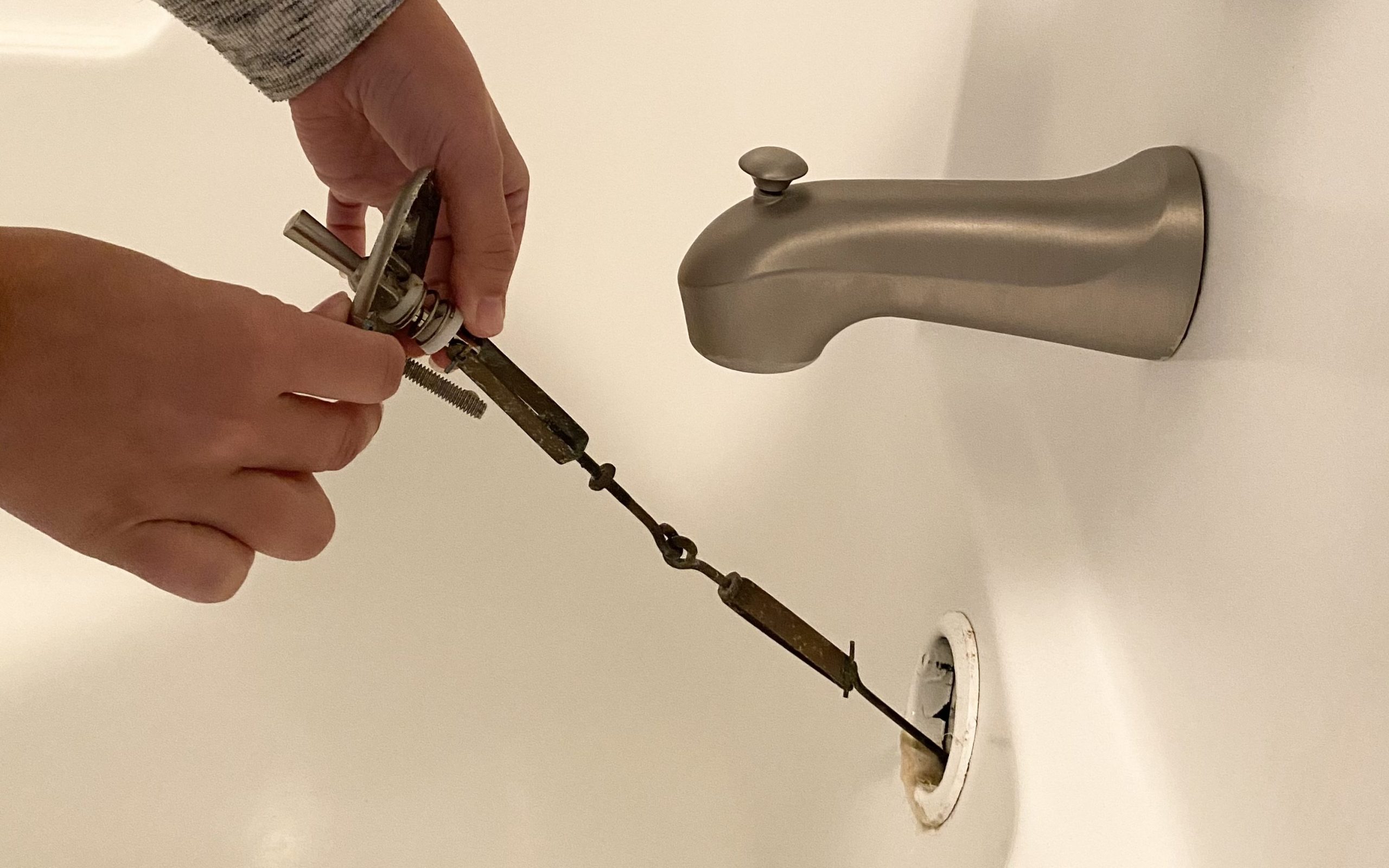
Knowing how to remove a bathtub trip lever is the step most people skip — and it’s the most important. Simply use a screwdriver to undo the overflow plate from the wall of the tub, as well as the drain cover from the floor of the tub. Once the screws are removed from the trip lever, pull up on it, and the entire mechanism will come out. Clearing hair from the bathtub drain cover and trip lever at this stage is key — clean off any hair or debris that might be attached to either, then set aside.
STEP 2: BLOCK THE TRIP LEVER HOLE
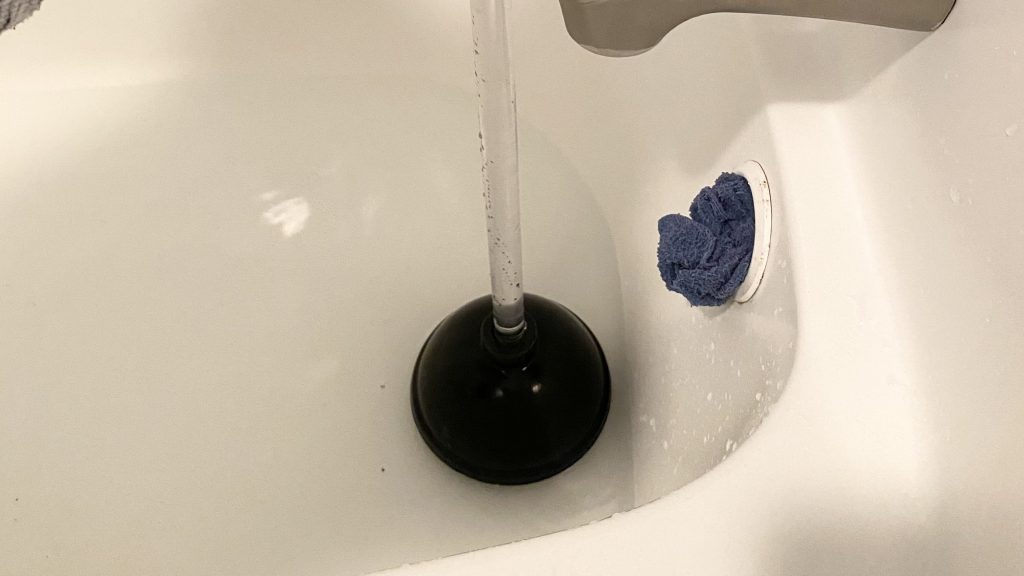
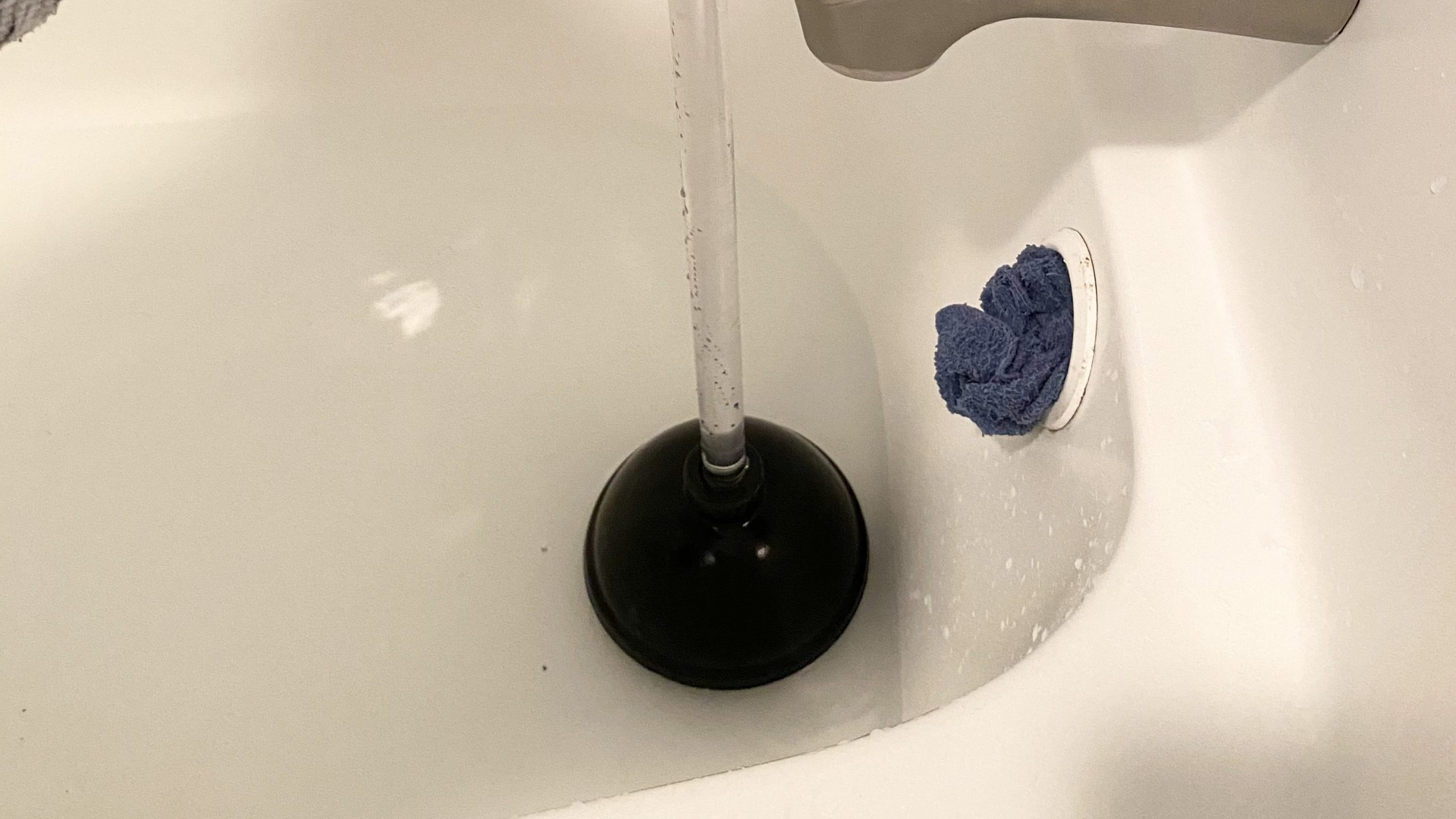
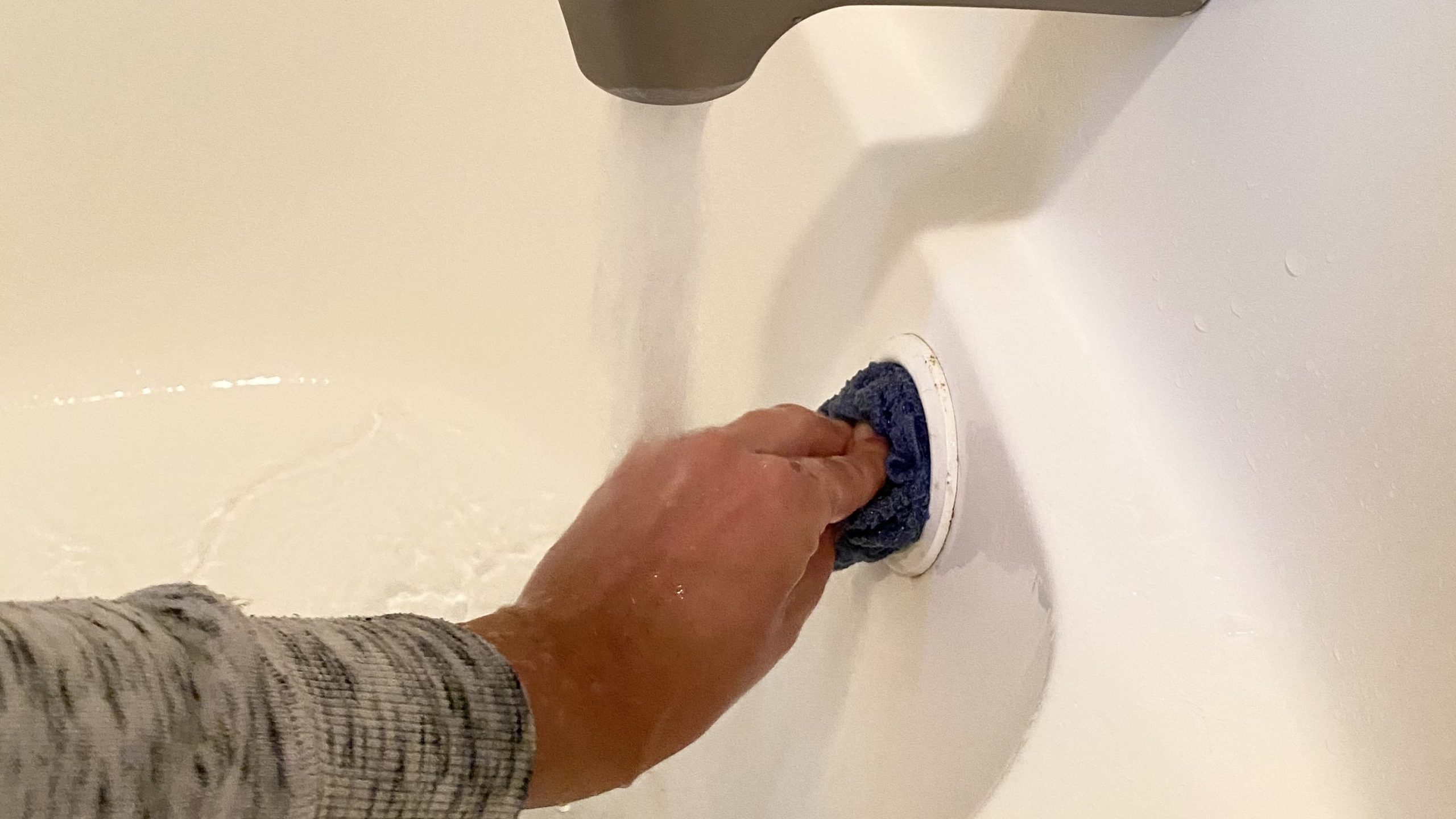
Thoroughly wet a rag or washcloth and use it to block the hole where the trip lever was. This is done because plungers work on suction power, and the overflow drain doesn’t close, for obvious reasons, so it acts as an air vent that kills the suction. Blocking it is what makes unclogging your tub drain with a plunger actually work.
Step 3 — Fill Your Tub, and Plunge Your Drain
You’ll want to fill your tub with 1–2 inches of warm/hot water, as this temperature range works best for dissolving soap in clogs. Place the plunger over the drain so the entire lip of the cup seals against the tub surface. Use quick, forceful strokes (at least 5–6 times) while maintaining the cup seal. On the last stroke, pull the cup all the way up off the drain and watch your worries wash away.
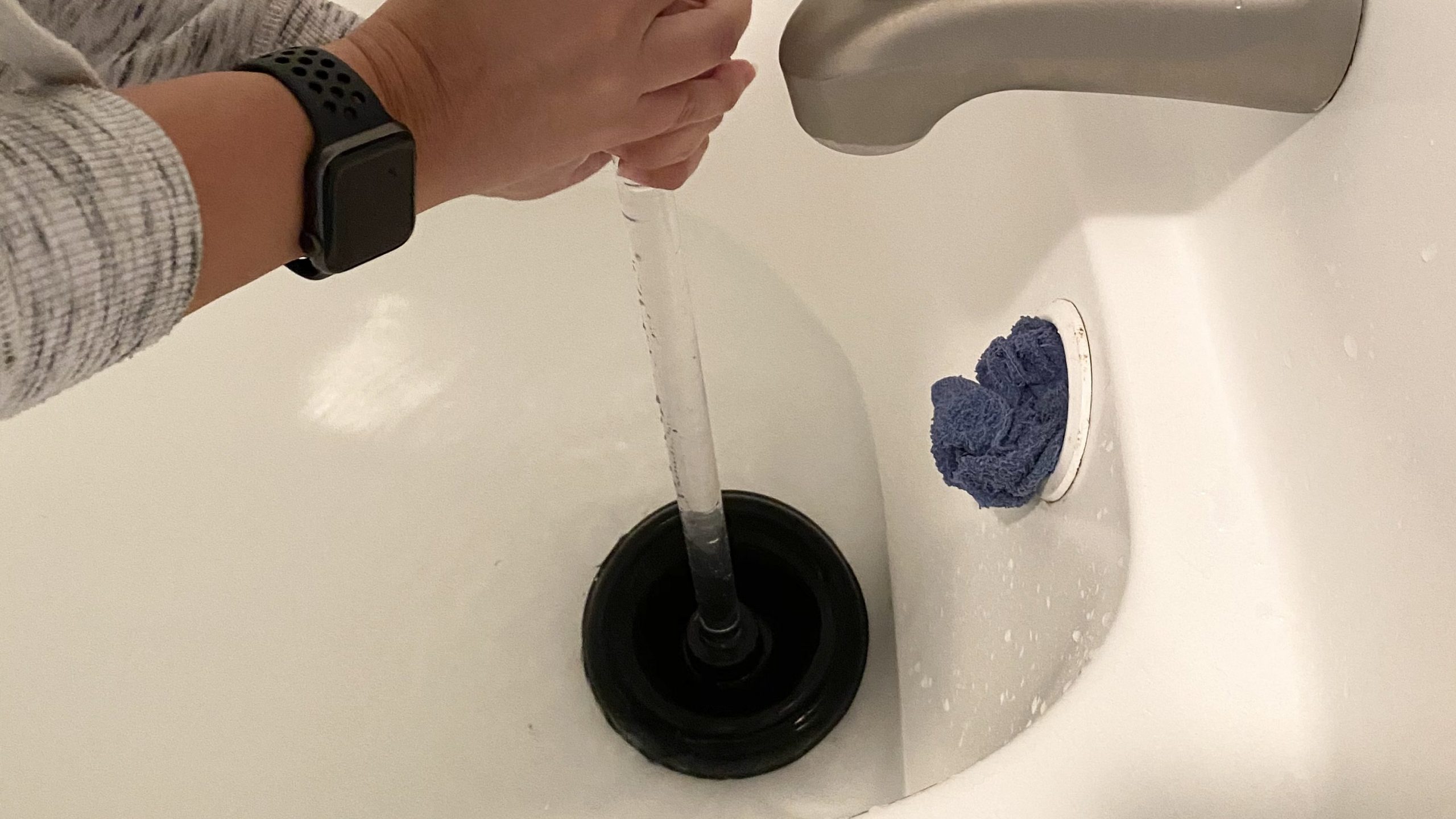
No More Standing Water — Your Tub Is Back
That’s all it takes to unclog a bathtub without chemicals, without a plumber, and without any special tools. Whether you’re dealing with a slow, clogged tub drain or a full backup, this three-step method is the most effective way to handle how to unclog a bathtub drain for good — and knowing how to plunge a bathtub correctly (trip lever and all) means you’ll never have to call a plumber for a simple clog again.